Real’s housing campaign aims to improve fire safety and emergency evacuation provision for Disabled residents of social housing. Currently, the protection and support available to these residents during emergencies varies, leaving many vulnerable to harm. This briefing outlines the issues, proposes solutions, and highlights actions that can be taken to safeguard Disabled residents. Please read on to learn more about the issue and how you can help improve safety for Disabled people in our community.
The issues
Disabled people are at greater risk of harm in emergencies. This can be related to their impairment or health-condition. For example, smoke inhalation is particularly dangerous to people with chronic obstructive pulmonary disease (COPD), while those with sensory or physical impairments may struggle to navigate their homes during an emergency. Individuals with neurodiverse conditions or mental health issues may find it difficult to respond in an emergency.
Emergency Evacuation
To ensure their safety, Disabled people may require additional support to evacuate their homes during an emergency. However, current practices among social landlords in Tower Hamlets vary; some offer a Personalised Emergency Evacuation Plan (PEEP) to residents, others do not. Instead, Disabled residents are often forced to “stay put” and wait for emergency services, which puts their lives at greater risk.
Accessible Communications
This inconsistency is compounded by a lack of awareness among residents about the emergency provisions available in their buildings. Our research indicates that many residents are unaware of fire safety procedures, even when their landlords offer support. Likewise, landlords often do not have knowledge of their residents’ specific communication needs.
There is a significant communication gap and the lack of accessible communication puts certain groups of people in more danger. Fire safety information is important to residents, but it isn’t always communicated to them in an accessible way, such as large print or in the resident’s first language.
Additionally, landlords may limit the methods of communication with residents. For example, only sending information via email but not offering a telephone call or home visit. Our research shows that half of social housing residents do not feel they are communicated with in ways accessible to them and half do not know how they would evacuate their home safely in an emergency.
Accessible Housing
The shortage of accessible homes in the borough significantly impacts the safety of Disabled residents during emergencies. Many are forced to live in unsuitable housing that lacks necessary adaptations, such as step-free access or wide doorways making emergency evacuation extremely challenging, particularly without assistance. These barriers not only hinder their ability to evacuate quickly but also increase the time and effort required for emergency services to provide aid. As a result, Disabled residents are disproportionately put at greater risk of harm during fires or other emergencies. This highlights the urgent need for more accessible homes and better planning to accommodate Disabled residents, ensuring their safety is not compromised by inadequate housing conditions. Once again, Disabled residents are placed at a disadvantage and face higher levels of risk simply due to the lack of accessible living environments.
The current system creates a postcode lottery, where the level of protection a Disabled resident receives depends on where they live and who their landlord is. This is unacceptable. The Equality Act requires landlords to ensure Disabled people are not disadvantaged. The Fire Safety Order requires landlords to mitigate the risks of fire and to secure safe and effective evacuation of properties. Landlords have a duty of care to prevent harm to residents through acts or omissions where risks are known or predicted.
Grenfell Tower Inquiry Report
The lack of adequate fire safety measures and emergency planning for Disabled residents has devastating consequences. In the Grenfell Tower disaster, 14 June 2017, 41% of the Disabled residents present that night died. The first phase of the Grenfell Tower Inquiry’s report recommended that PEEPs should be offered to Disabled and vulnerable residents in high-rise blocks to avoid such disproportionate loss. This recommendation was rejected by the previous government.
The second phase of the report revisited and repeated the recommendation, ‘that the owner and manager of every high-rise residential building be required by law to prepare Personal Emergency Evacuation Plans (PEEPs) for all residents whose ability to evacuate the building without assistance may be compromised’[1]; and that further evidence, ‘has confirmed us in the view that the responsible person for a general needs residential building should collect sufficient information about vulnerable occupants to enable appropriate measures to be taken to assist their escape in the event of a fire’[2].
We welcome the current government’s commitment to address these recommendations and implement PEEPs for Disabled and vulnerable residents in high-rise blocks. However, the Grenfell Tower Inquiry highlights that it is not satisfactory to define a building as “higher risk” by reference only to its height. That, ‘more relevant is the nature of its use and, in particular, the likely presence of vulnerable people, for whom evacuation in the event of a fire or other emergency would be likely to present difficulty’[3].
Disabled people may be at greater risk of harm in fires and other emergencies, regardless of the height of the building. We therefore call for PEEPs to be offered to Disabled and vulnerable residents of all housing blocks in Tower Hamlets.
Solutions
To address these issues, the following steps should be taken:
- Identify Disabled and vulnerable residents who may be at greater risk of harm in an emergency.
- Establish any communication needs of these residents, record these needs and how to meet them.
- Offer a Personalised Emergency Evacuation Plan (PEEP) to these residents in all housing blocks.
- Take steps to raise awareness among all residents about emergency evacuation procedures and available support.
- Develop a comprehensive plan to implement all the above.
Implementing these solutions will improve the safety of Disabled residents and others who may struggle to evacuate their homes, such as older or pregnant people. In addition to reducing casualties from fires and other emergencies, these measures would also ease the pressure on emergency services and improve the relationship between residents and landlords.
Landlords and their staff must identify, understand and respond to residents’ communication needs to raise awareness of fire safety and evacuation procedures. This will help address the disproportionate danger Disabled residents are placed in and the inequitable service they receive. There will be other positive effects beyond emergency planning. Ensuring residents receive accessible information can help with issues related to repairs, rent arrears, and other tenancy issues.
Providing an accessible and inclusive service is not just good practice. The Equality Act 2010 requires providers of goods and services, public bodies and housing associations to take steps to eliminate the barriers Disabled people face. No service should be inaccessible to Disabled people.
Tower Hamlets was the first local authority in the country to offer universal free school meals. Itis planning to cease charging for social care, which will make it one of only two local authorities in the country to do so. Supporting this campaign, acting on its recommendations is another opportunity for Tower Hamlets to be a shining example to local authorities across London and the country.
What you can do
Landlords:
- Act immediately to implement the solutions outlined above.
- Identify Disabled residents, offer PEEPs, and comprehensively raise awareness about emergency evacuation procedures in accessible ways.
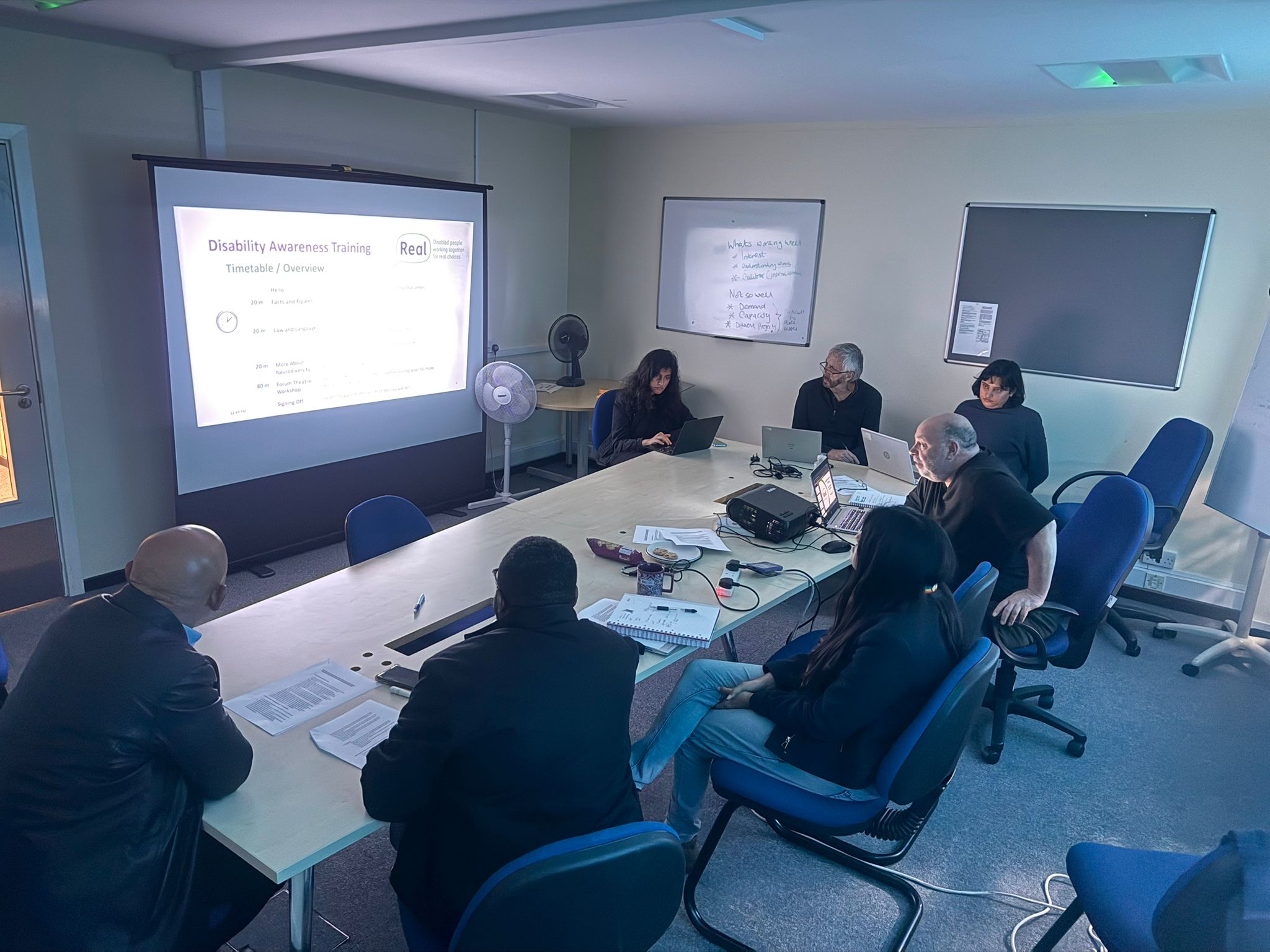
- Provide Disability Awareness training to staff, enabling them to understand barriers Disabled people may face which disproportionately put them at risk in emergencies.
- Ensure that all communication with residents is accessible to them. Anticipate needs. Have different formats of communication ready and available.
Council:
- Ensure that PEEPs and other access provisions are offered at the start of a new tenancy.
- Share a resident’s communication needs with their new landlord.
- Build more accessible housing with greater fire safety provision.
- Consider emergency evacuation needs at the planning approval stage for new developments.
Councillors and MPs:
- Advocate for improved fire safety measures by lobbying the council and the Mayor to prioritise the safety of Disabled residents.
Residents:
- Reflect on whether you would need support tin an emergency and find out what your landlord offers.
- Share fire safety and evacuation information with family, friends, and neighbours to help raise awareness.
- Find organisations operating in your area discussing and campaigning on resident safety.
- Organise your own group with residents from your building, estate or area on resident safety.
London Fire Brigade
- Collaborate with social landlords to improve fire safety for Disabled residents, potentially offering training or resources to enhance their emergency planning processes.
Further information
This briefing has been co-produced with the campaign group made up of Real’s staff, members and other Disabled residents of Tower Hamlets. You can download a .pdf of the briefing to share with others here: Real’s Housing Campaign Briefing
We welcome the opportunity to discuss the campaign further and how you can support its goals. Please reach out to Amris Sahota or Rowan Earle on the following contact details:
Amris Sahota
Email: amris.sahota@real.org.uk
Phone / text: 07768 242275
Rowan Earle
Email: rowan.earle@real.org.uk
[1] Grenfell Tower Inquiry: Phase 2 Report, 2024, Volume 7, Para 113.79
[2] Ibid, Para 113.81
[3] Ibid, Para 113.7
© Real DPO 2024